Or is it, Agatha? you might be asking in that cute way you do when you’re trying to look clever but are really just being silly.
Well, yes, it is. Because pain is always painful. Guaranteed.
Now if you are currently clad in handcuffs with a ball gag in your mouth, you might be tempted to speak up to contradict me. You needn’t bother. I’m well aware of the whole “pain is pleasure” scene, as the young sadomasochists are calling it these days, though I remain skeptical. I mean, we all love a good whipping, sure, but those welts are going to sting like a bitch the second you lower yourself into a nice, hot bubble bath and then you’ll have wished you thought twice last night before introducing leather play into your bedroom shenanigans. Let’s face it — orgasms are a dime a dozen (if you’re a Gold Club member) but few things are more pleasing than a long, hot soak. Write that on a piece of paper and tape it to the door of your sex cupboard (or car dashboard, if you’re a member of the dogging community) to remind yourself for next time. In the long term, doing what you can to avoid pain usually pays off dividends.
However, pain does have a purpose and the next time you feel it, I recommend you stop to think about the lesson it is attempting to pass on. Pain is rarely subtle; it screams but doesn’t whisper.
For example, if your hand hurts because you’re hitting it with a hammer, you’re probably going to want to stop hitting your hand with a hammer. Pain’s messages are usually as straight forward as that.
If your ears are hurting, turn down your iPod or purchase higher quality headphones.
If your eyes are hurting, you probably need more sleep or to take breaks from looking at the computer.
If your nose is hurting, cut back on the cocaine.
I am not even a doctor and I know these things.
Emotional pain works similarly. If your heart is breaking, pain is trying to tell you that your taste in romantic partners is poor. If you suffer from a panic attack on the drive to work, you probably should quit your job. If you feel despondent, why not lift your spirits with some cocaine?
So while we can learn from pain (and learning should always bring joy), ultimately the evidence has shown that pleasure packs more punch in the pleasure department than its alternative. However, this is not say that pleasure doesn’t have the potential to bring harm. It does, because everything does. Are you really that naive? I’m sure you familiar with roses, yes? They’re beautiful, very pleasurable to both look at and smell. Yet if you eat two thousand tonnes of rose petals, you are going to get a very nasty tummy ache.
I hear the word a lot. It’s usually used to dismiss something, to question its credibility or to accuse the person speaking about it of being a liar and/or idiot.
You already know how I feel about liars. And idiots. Now I’m going to tell you how I feel about bollocks. Well, specifically complementary medicine, which is what curly-haired clever clogs currently enjoy dismissing.
Complementary medicine can refer to a wide range of health remedies — from herbs, tinctures and oils to procedures like cupping, acupuncture, and energy therapy. These options are seen as alternative, because they are not scientifically sensible as things like drilling into teeth, putting pigs’ parts into humans and swallowing chemicals in tablet form are.
I am not going to defend complementary medicine. However, I am also not going to rip it a new asshole either. Because, while I have no truck with most of it myself, those who judge should keep a few things in mind.
If you think everything scientists get up to is automatically above board, I’d like to remind you of Victor Frankenstein and Henry Jekyll. Yes, they had white coats and medical books but their methods were a little dubious, don’t you agree?
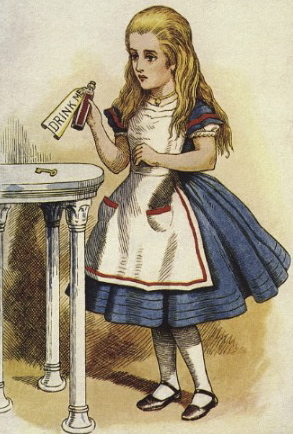
As long as no one is being swindled out of cash or doing damage to themselves, if something relieves someone’s symptoms or worries, who am I to judge them and their gullibility? There is such a thing as the power of the mind, you know. What about Alice, eh? After drinking a special potion, she went on a pretty magical adventure — is it asking too much to allow a little girl some joy? (Please do not be distracted by my over-reliance on fiction-based evidence.)
Quite frankly, some of what falls under the complementary medicine label is actually pretty clever. For example, making sure you get good nutrients can prevent getting poorly in the first place. Filling your room with some nice smelling lavender isn’t going to cure genital herpes, but it might lift your spirits so you focus less on that painful itch. Sometimes what is actually common sense is banished as bunkum, just because no pharmaceuticalcompany can market it.
Massage is another treatment that often gets unfairly lumped in with alternative therapies. Unless, of course, it’s called physical therapy when all of a sudden it’s medically sound. Whatevs. I happen to know that certain types of body manipulation are extremely beneficial: they can relax stiff muscles, can hasten injury recovery, and, if done in the right alley, can earn you a quick tenner.
All I’m saying is this: I don’t care what you do. Go to a GP with a certificate and swallow her elixirs or go to a herbalist and rub his salve into your chest. As long as you get the facts for yourself before you do anything, you won’t ever hear of bollocks coming out of my mouth. Promise.
I am so sorry, my dears, for neglecting you. I have been off on my jollies , but was unexpectedly delayed. Unfortunately, I had the bad luck of choosing the same guesthouse as a formerly famous American rock god who caused a disruption to my rest and/or relaxation. I don’t want to give him the publicity by mentioning of name as his antics clearly indicate a desperate need to be back in the spotlight. Why exactly he released what he released into the pool, I do not know, but the quarantine meant that I missed my flight home and had to reschedule a number of appointments, which might not have been important to one Axl Rose, but which really mattered to me, thank you very much.
It might take a few days for me to get back to my normal schedule, but know I’ve missed you more than I can say because, I swear on a stack of bibles, it is you — and your love — that sustains me.
This proverb is one of the many reasons I love the Mexican people (their overindulgence in cilantro is perhaps the only reason I do not). Too many people today only “do good” if it benefits their friends or family or even themselves personally—by helping them get promoted at work, go to the head of the class once they get to heaven or satisfy their God complex.
When was the last time you did good without worrying to whom? You just did something good, something nice, something kind. You didn’t tell anyone, maybe not even the person who benefited (making anonymous erotic phonecalls, I’m afraid, does not count). What would happen if you did something like this today? What could it hurt? Whom could it help?
I’d like to say I do good like this all the time. But, of course, I can’t say that because it would be taking credit for my good acts, which nullifies the very point I’m trying to make (pay attention, please). So I won’t say that I do good all the time, but instead I shall say that I will try to be more like the Mexicans and spread a little sunshine around—to anyone, to everyone—just because doing good is good. You should do some good, too. If you do, resist the temptation to email me to detail what you’ve done, because one, keeping quiet about it is part of the challenge and two, I’m not really that interested in you as a person and you are quickly becoming tiresome to me.
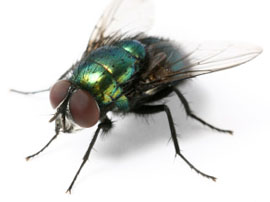
The other day I was in the library and was confronted with a rather unsavoury situation. Now I greatly admire the staff at our local branch: they have always been polite — in fact as a show of respect for my frequent custom, they often allow me to take home books for free as long as I show my loyalty card. However, my experience this week was quite shocking: inside the library was a large and perpetually annoying fly.
Now as a rule, I cherish all sentient beings, even disgusting ones, and I’ve got no problems with flies when they are out in nature or buzzing around someone other than myself. But I am sorry: I just cannot tolerate them near my face. Call me a Nazi, I don’t care. Flies in my face are simply unacceptable.
Obviously, my first strategy was to move away. I left the periodicals and moved to a more central location, hoping that if he were to follow, at least there would be other people present for him to annoy. However, the fly did not take the bait. Fine, I thought, I am free from torment, and I sat quietly, reflecting.
Shortly thereafter, the library began to empty and I soon found myself alone in the big, book-filled room. Lo and behold, who shows up? That’s right, it was the fly. The dastardly little devil obviously just wanted to avoid having witnesses to his harassment. A war was now on.
I grabbed the first book I could and prepared to send the fly to his maker. I won’t detail the delicate dance of battle, but I can assure you that only one of us walked away still breathing.
As I sat down to wait for Christopher’s play group to come to a close, I found myself skimming through the book-cum-murder-weapon. It turned out to be Careful Now! The History of Health and Safety Laws. And I must say, I found it surprisingly interesting.
Buttloads of people currently find Health and Safety laws oppressively restrictive and generally stupid, and, quite frankly, they frequently are. I now know, though, that it’s incorrect to assume these rules are evidence of today’s Nanny State. Actually, H&S has been around for a long time and it used to be much worse than it is now.
NOW: East Riding Council restricts kite-flying on beaches because it is a risk to others.
THEN: In the early twentieth century, word went round about an old woman who had died after swallowing a fly, a spider, a bird, a cat, a dog, a goat, a cow, and a horse, so a small Cornish village ordered all farmers to slaughter their animals to ensure such a circumstance did not reoccur.
NOW: A school bans triangle-shaped flapjacks because they could thrown at children.
THEN: For almost a month in 1923, children were not allowed to eat any solid food as the chewing motion was deemed “potentially threatening to others.” Parents were only permitted to serve soup and applesauce for twenty-six days before the law was reversed.
NOW: The Royal British Legion stops supplying pins with its poppies to avoid being sued by those who prick themselves.
THEN: Although the most famous of these cases is the American woman who sued McDonalds because her coffee was hot, it was not the first example of this type of litigation. In Victorian times, Lord Stephens of Stephanie brought a case against a five-year-old child who was playing with a stick in the street. Lord Stephens’ argument was that the stick could have flown from the child’s hand, turned the corner and continued into the window of a building where the good man was purchasing a piece of jewellery for his mother. The Court agreed that Lord was assuredly more important as a human being than any dirty child could ever be and awarded him the boy’s newborn sister (who was quickly deposited at the nearest poorhouse).
I am hoping, of course, that the fly’s family does not press charges against me. It’d be a bitter irony to have the book thrown at me for throwing the book at the fly. Bitter, but admittedly poetic.
While I have had harsh words in the past for science and the brain boxes who dedicate their lives to needlessly showing me photos of the insides of frogs, I would hate for anyone to think that I was anti-nature. I am not. The natural world is great in my book. In fact, I choose nature over non-nature every time.
Today, for example, it’s been all nature, all morning over here at the Whitt-Wellington homestead. Christopher and I woke early in the hopes of getting to work before the mercury got too high. There’s a tree in the garden which has been growing dangerously close to the back wall. While I acknowledge and admire the balls it takes for a tree to do that, I wanted it nipped in the bud (quite literally) before it caused any trouble. I was happy to hold the ladder as Christopher climbed up; it was such a beautiful sight seeing a strong, young man amidst the green branches with the morning sun’s rays catching the blonde highlights in his hair. I wish I had had my camera at hand to take a photo, but I felt satisfied that the image was burned into my memory (and besides I don’t like to leave Christopher on his own with the shears). The job took a little longer than we had anticipated, but that’s another wonderful characteristic of nature: it’s a worthy foe.
However, not all of our morning experiences in nature were adversarial. I plucked the ready vegetables our greenhouse garden had to offer us, while Christopher tidied the flowerbeds. After rinsing our harvest, I popped on the kettle, just as Christopher washed the last bit of dirt from his sturdy hands. We went back out to the garden to enjoy our tea, and I saw that Christopher had topped the table with a bouquet of lovely blooms.
A wonderful morning, for sure, all courtesy of nature.
One area where I can come together with the scientists (note: get your mind out of the gutter) is the realisation that humans have a responsibility to look after nature. Actually, since many religions see the Earth as God’s creation and believe the big guy expects us to be its stewards, we’re all really in agreement. Our world would be greatly improved if we gave nature a little more props, doing all we can to treat it right and show it respect — in all its forms, whether it’s hot or cold, dry or wet, creepy or crawly, gorgeous as a gardenia or gross as a frog’s gizzards.
A lovely dear American friend named Martin got in touch to say:
Miss Agatha,
Over the past few days, you’ve been doing quite a lot of bellowing about something called the Ashes, which I have deduced is related to the sport of cricket. While it’s always thrilling to hear you cry out with joy, I confess I feel unable to truly appreciate your excitement as I find cricket somewhat confusing. I’ve been doing some research, but still feel befuddled. Can you help a poor man who just wants to understand?
Yours truly,
Martin
I don’t doubt Martin is not alone in his bewilderment, because it can be hard to understand any sport if you weren’t taught the rules by a frustrated, middle-aged primary school PE teacher who still lives with his mother. Even I myself once was ignorant.
Because I love learning, I went directly to the library to educate myself on the history, rules and strategies of cricket. The librarian suggested two tomes: Cricket for Dummies and Helping Women Understand Cricket (if you guessed the librarian was male, you are correct). Personally, I don’t like those . . . for Dummies books because I don’t believe in starting off the writer/reader relationship with an insult. The other book was equally appalling: most of its pages were dedicated to advice on keeping large plates of sandwiches fresh and jugs of tea hot to ensure players’ satisfaction at the lunch interval. Outrageous!
There’s also quite a famous summary which is often titled “Explaining Cricket to Foreigners.” Now, of course, we can’t ignore the xenophobic stupidity of the title nor the fact that, while the explanation is correct, it’s clearly designed to mock those who aren’t familiar with the sport. Here it is:
You have two sides, one out in the field and one in. Each man that’s in the side that’s in goes out, and when he’s out he comes in and the next man goes in until he’s out. When they are all out, the side that’s out comes in and the side that’s been in goes out and tries to get those coming in, out. Sometimes you get men still in and not out.
When a man goes out to go in, the men who are out try to get him out, and when he is out he goes in and the next man in goes out and goes in. There are two men called umpires who stay all out all the time and they decide when the men who are in are out. When both sides have been in and all the men have been out, and both sides have been out twice after all the men have been in, including those who are not out, that is the end of the game!
So it makes sense that Martin would come to me, a woman famous for her thoughtful clarity and extensive experience with bats and balls. So let’s get to work.
If you are familiar with baseball, realise that this will actually hinder rather than help your understanding. It ain’t baseball, people, and trying hard to connect the two is just going to get your brain cells in a tizz. So stop doing that.
Instead please read through the following helpful explanation of test cricket.
THE SET UP:
In the middle of a great big grassy field is a strip of dirt (called the pitch). At each of the strip’s ends are three wooden sticks (called stumps) with two little sticks (bails) balanced across them. Together, the stumps and bails make up the wicket. This is important.
Two teams of eleven players each wear white outfits.
Throwing the ball (which is maroon) at the batsman is called bowling. Bowling involves a little run then a little jump then whipping the arm up in the air before releasing the ball. It looks wonky at first, but it’s a proper skill because the bowler can’t go too wide (called a wide) nor can the bowler’s front foot cross a certain line (called a no-ball).
Batsmen use fat, flat bats made out of willow, with a thin handle at one end. Batsmen also wear helmets and pads to protect their legs because just because the ball is maroon, don’t think for a minute it can’t do some proper damage if you’re hit by it. (However, fielders do not wear gloves because they aren’t pussies about it.) That batsmen stand in front of the wicket to protect it from being hit by the bowler.
What’s that you say, Agatha? How can the batsman be standing in front of the wicket when you just said there are two wickets on the pitch?
Get your mind blown, suckas. There are two batsman. But there are also two bowlers! Can you believe that?
A bowler bowls six times at the batsman standing in front of the wicket at one end. This is called an over. Then the other bowler bowls six times to the batsman in front of the other wicket. The fielders move position to be better prepared to catch the new batsman’s hits.
One player on the fielding side stands behind the wicket; this player is called the wicket keeper. Big, webbed gloves help the wicketkeeper stop the balls that have been bowled but not hit.
There are two umpires on the field. They also wear white shirts but black trousers. There is a third umpire who looks at video replays, and a fourth umpire who is basically the other three umpires’ bitch and brings them drinks and new balls if the ball gets too beat up.
Here is a cricket pitch.
Here is a cricket pitch that has been invaded by a swarm of bees.
PLAY:
One team bats while the other fields. A team is at bat until ten batsmen get out. This is called an innings (no, not an inning). Then they switch places and the second team bats until ten of their batsmen are out. Each team gets two innings.
Obviously the goal of the fielding team is to get the batsmen out.
The goal of the batting team is slightly more complex: the batsman must protect the wicket from being hit by the bowler (if this happens and the bails fall off the stumps, the batsman is out).
The most ideal way to protect the wicket is to hit the ball with the bat. If it’s hit hard or far enough, both batsmen run to the other wicket and one run is earned. If they’ve got enough time to run back to their original wicket, they get another run. They can do this as much as they want but if a fielding player is able to knock the bails off the stumps with the ball (including by throwing the ball directly at the stumps) before the batman gets back to it, then that batsman is out. However, if the ball is hit so hard that it rolls to the edge of the grassy field (called the boundary), neither batsman has to run; that team just automatically earns four runs. If the batsman hits so the ball goes right over the boundary, six runs are earned. If the ball is hit up in the air and a fielder catches it, the batsman is out.
Another way a batsman can get out is called leg-before-wicket (LBW). The batsman cannot use the body to protect the wicket. If the bowler bowls a ball that seems like it would hit the stumps, and the batman disrupts the ball’s flight with a body block (well, a leg block since the pads more easily absorb the force of the ball than, say, the batsman’s crotch would), then the bowler (and other fielders) jump up in the air and yell “How’s that?” (usually written as “Howzat” for comic effect). If the umpire deems that yes, the ball would have hit the stumps if it weren’t for the batsman’s big fat legs, then the batsman is out LBW.
Though both batsmen run at the same time to earn runs, the one who actually hit the ball gets the credit. If a batsman gets credit for fifty runs before getting out, the batsman holds up the bat in the air and all their supporters cheer. If the batsman gets one hundred runs before getting out (called a century), the helmet is removed and the bat is held up. The batsman gets a standing ovation, sometimes even from their opponent’s fans, and the commentators talk about how this is a historic moment.
Brian Lara of the West Indies once scored four centuries in one innings without getting out. Now that was a historic moment.
On the other hand, if a batsman gets out before ever scoring a run, it’s called a duck and the crowd should feel free to mock the batsman, especially if it happens on the first ball that’s bowled (or if the batsman’s Australian). This situation is called a golden duck. Quack.
Please keep in mind, though, that the batsman does not have to hit the ball, doesn’t even have to try to hit the ball. As long as the bails don’t fall, it’s cool. Sometimes quite a long time passes in between runs. As a viewer this can seem tedious, I will not lie. But it can be very strategic play. This is especially true if one batsman is much better than the other. The crap one just has to not to get out; after six bowls, the other batsman is up and can start swinging and scoring.
Test matches last a long time, usually three to five days. If an innings is over quickly, that means fewer runs are earned. That’s bad for that team. So the teams try to make their innings last as long as they can, scoring as many runs as they can. Hanif Mohammad of Pakistan once made his own innings last for over sixteen hours! What the hell, dude? Each day’s play is usually about seven hours, with a few breaks for drinks or lunch. The batsmen who haven’t got out at the end of the day are the ones who start the next day.
During the match, the scores reflect only the batting team’s status. The scoreboard will say 113-4 or the commentators will say “At the end of that over, England are 113 for 4.” The first number refers to how many runs have been earned; the second refers to how many wickets have fallen (how many outs). At the end of the first over, the team’s score might be 250-all out (250 runs, all batsmen out). When the first team bats again (the third innings), those runs are added to their previous total but the out total goes back to zero. After the end of the third innings, the team that batted first can no longer earn any more runs. So if their grand total is 456, this means that during the fourth innings, the other team is “chasing” 456.
Obviously the fourth innings is key in determining the match’s winner. If the team batting during that fourth inning overtakes the score of the other team, the match is over and they win. If both teams play their full two innings (where each has ten batsmen out twice), the team with the higher score wins.
However, the match could actually end after the third innings (when the team that batted first has finished batting for the second time). If that team still has fewer runs than the other team, the match is considered lost (since that team won’t have another chance to bat) and the fourth innings don’t have to even be played (since the team with the higher score would just be adding to their already higher score). Everyone goes home and the people with tickets to Day Five of the test match feel they have been slighted, even if their team has actually won. Babies.
You can also have a draw in cricket, which many people whinge about — “It lasts five days and there’s not even in a winner? Whinge, whinge, whinge.” Yeah, well, shut up.
A cricket match ends in a draw if the fourth innings does not end (meaning the batting team has not got ten outs) by the end of the allotted time (by the end of play on Day Five). If that’s the case, it’s a draw regardless of who has the higher number of runs. Sometimes a team will just make that last innings go on forever, even if they know they won’t be able to score enough runs. It’s a hard way for a match to end (if your team is the one in the lead), but you know what? Life is hard, mate. Get used to it.
ADDITIONAL INFORMATION:
Like many sports, cricket is full of complications. There are many ways to bowl the ball and different fielding positions. There are cunning strategies. There is new technology to highlight one’s viewing pleasure and help umpires make their decisions. A scorecard can be kept using symbols and notes. Statistics and records are thoroughly analysed. Test cricket is played between different national teams, but there are many different levels. There can be one day matches, matches that last for only forty overs, all types of crazy shit.
But I think perhaps we’ve had enough for today.
Except to mention that the particular test match that had me erupting this week is part of a very important series of test matches that takes place every other year. It is called the Ashes and highlights the longstanding rivalry between England and Australia. Let’s let Lego explain:
So there, Martin, is cricket.
I’d just like to end with the suggestion that you and other readers from non-cricket playing countries and/or who are unfamiliar with the game just watch it. It’s hard to comprehend anything in the abstract. Think about the first time young people hear about sex — they can’t imagine how it works or why anyone would be interested. This is why it’s better to actually watch it happening (actually now that I’ve written that line out, please disregard my previous sex analogy). I’m just saying cricket — like all sports — has tons of little details that are hard to sort out just on paper. In fact, despite my own understanding of cricket, when I read back all I’ve just posted, I think, what the fuck are you talking about? So read but then watch and it’ll all fall into place.
Who knows? Maybe once that happens, you’ll fancy playing it yourself. Just don’t play for Australia or I will instantly become your mortal enemy.
As you probably already know, my recent collection, Everyone Needs An Algonquin: The Collected Wit and Wisdom of Agatha Whitt-Wellington (Miss), has taken the publishing world by storm. Like pornography and methamphetamine, the public just cannot get enough.
Yet you have not purchased your copy.
I’m okay with this, I guess. I’m not going to bully you. It’s cool. Besides, I know times are tight for everyone financially; it’s hard to find the extra pennies.
So here’s the diddly-dealio: I’m giving away autographed copies via the website GoodReads. You have until the end of July to enter. To get into the running, you don’t even have to include a 100 word essay about why you want a copy[1], just enter and five winners will be randomly chosen[2]. Easy-peasy.
And best of all? You don’t have to enjoy my book alone in a darkened room, weeping ashamedly, as you do with porn, nor will it, like meth, leave you toothless.
[1] Though if you really feel like singing my praises, feel free to do so in comment section below.
[2] If you are a winner, though, let me know you read this website, and I’ll send you a little extra something-something.
I apologise for neglecting you as of late. Yes, I’ve been busy, but if I’m honest — and you know I try to be as frequently as I can — it’s not my status as a globetrotter that’s kept me from you: it’s just that I’ve been struggling with compassion fatigue.
Thoughtful people like myself are at risk of compassion fatigue, which so-called experts define as “feeling overwhelmed, confused and depressed by the crap state of affairs.” And I’m afraid I’ve fallen ill with it.
Symptoms include a foggy head, dizziness and an inability to rant and/or rave about topics as varied as Edward Snowden, the US Supreme Court and Glastonbury. Sufferers may find themselves asking questions like “Am I making a difference in the world?” and “Does Miley Cyrus even matter?”
While I’ve appreciated Christopher’s nursing skills (and his willingness to wear the outfit), I’m afraid doctors believe the illness has to simply run its course before I’ll start feeling better. They suggested reciting affirmations while looking in the mirror or hanging a list of my accomplishments on the fridge as ways to boost my self-confidence, but quite frankly, that’s just silly. Clearly, the problem isn’t me. It’s the world.
However, I’m always prepared to follow doctor’s orders especially if it involves my lounging around all day while Christopher waits on me hand and foot. I know I’ll bounce back. I have always been a person who cares — it’s who I am — and I couldn’t stop caring even if I cared to.
Thank you to all who have sent notes and packages to wish me well as I recover. Even though I’m incapable of giving a shit about them at the moment, I’m sure I’ll be appreciative once I’m back to my normal, über-compassionate self.
Having recently parted ways with her publisher, Rupert Stanley Quim, Miss Agatha Whitt-Wellington has asked Christopher, the boy who trims her bush, to show her how to publish her thoughts on the Internet. Now no one need be denied of her musings. How lovely!
To find out more about this mysteriously seductive woman, please peruse "Agatha: The Miss Behind the Myth" above.
Join 48 other subscribers
Get The Book!
Everyone Needs An Algonquin: The Collected Wit and Wisdom of Agatha Whitt-Wellington (Miss) brings Agatha home to you. Read some old favourites alongside bucket loads of new material.

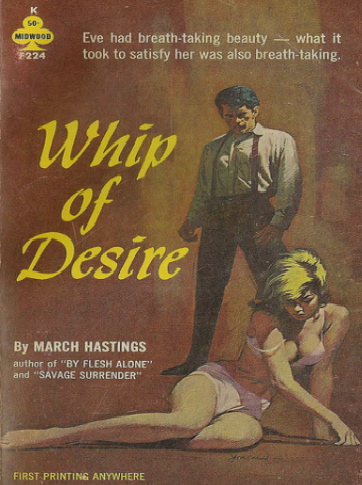 Now if you are currently clad in handcuffs with a ball gag in your mouth, you might be tempted to speak up to contradict me. You needn’t bother. I’m well aware of the whole “pain is pleasure” scene, as the young sadomasochists are calling it these days, though I remain skeptical. I mean, we all love a good whipping, sure, but those welts are going to sting like a bitch the second you lower yourself into a nice, hot bubble bath and then you’ll have wished you thought twice last night before introducing leather play into your bedroom shenanigans. Let’s face it — orgasms are a dime a dozen (if you’re a Gold Club member) but few things are more pleasing than a long, hot soak. Write that on a piece of paper and tape it to the door of your sex cupboard (or car dashboard, if you’re a member of the dogging community) to remind yourself for next time. In the long term, doing what you can to avoid pain usually pays off dividends.




 Everyone Needs an Algonquin
Agatha’s Public Chimes In