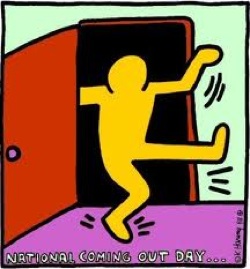
Happy National Coming Out Day, Homosexuals!

11 Oct

Today is National Coming Out Day. It’s a little reminder that gay, lesbian, bisexual, and transgendered people deserve some respect and celebration. It’s confusing to me that people still need reminding—surely as long as Stephen Fry and Pam St. Clement walk the earth, it should be blatantly obvious that non-heterosexuals are fabulous. However, there are still enough dumbasses around that it’s important to take a day to remember.

I personally don’t believe in labels: I like to keep all my options open as you never know just when you may feel that spark (Charlize Theron, if you’re reading this, call me). But just as there are those who insist they are heterosexual (despite that little fumbling incident at Boy Scout camp), there are those who feel confident calling themselves homosexual, and what’s wrong with that? As long as they don’t keep broken toys and other rubbish in their gardens (an act that is deserving of criticism), I say live and let live. When it comes to the bedroom department, I am in no position to judge anyone for their preferences (though I have published Agatha’s Annotated Kama Sutra, a text in which I judge various positions and list my preferences). Having a similar layout in their private areas should not restrict two adults who fancy a little sexy sex with each other. If you think it should, perhaps you should take a minute to ask yourself why you are so interested in other people’s sex lives. Are you some kind of pervert or something?

We supposedly live in enlightened times. When we hear about homosexuality being illegal, we see those laws as antiquated. We find ridiculous the anti-homosexual propaganda of the 1950s. We laugh at the coded language of the past that thinly veiled institutional homophobia: the actor forced to hide his true self and instead be labeled a “confirmed bachelor”; the athletic woman dismissed as a “tomboy”; the male hairdresser attacked simply because he “liked cock.” Pshaw! we say.

Yet are things all that different today? It’s sad that we still deny life, liberty and the pursuit of happiness for all—laws continue to restrict civil rights, hatred continues to breed violence and ignorance continues to thrive. It still takes a kind of bravery to come out publicly as L or G or B or T.

So let us celebrate that bravery. If you’re of the queer persuasion, hoorah for you! If you’re heterosexual but an ally of the gay community, hoorah for you as well! And if you’re Charlize Theron, seriously, consider joining me for dinner this weekend. I can definitely make it worth your while.

Look Pretty, Talk Pretty: Advice for the Presidential Debates

2 Oct

As an internationally known expert on public speaking, I have been inundated the last few weeks with requests for my debate advice from campaign managers on both sides of the US political battle. Listen, people, I am just one woman. I simply cannot do everything others request of me. Even if I wanted to (which is only about half of the time anyway). I’m going to be honest with you: sending me multiple emails on the same day you’ve left two answerphone messages already does nothing to hasten my reply; actually, it just irritates me.

However—despite the hassles, not because of them—I’ve been moved to share some of my insights with the candidates. Why? Because I love my country and I hate stupidity. Please listen carefully as I intend to say this just once.

Let’s begin by looking at what you can learn from others. From my thorough analysis of the 2010 British election, we can take away important lessons from the three candidates there:

  • David Cameron teaches us that if you look doughy in life, you will look five times more doughy on television. Get yourself camera-ready, but don’t go crazy with the hair product or make-up (or fake tan).
  • Gordon Brown  teaches us that doing things that don’t come naturally (in his case smiling) is not going to fool anyone.
  • Nick Clegg teaches us that if you make promises that you cannot keep, you will end up curled in the foetal position because an entire nation sees you as pathetic and/or bastard-like.

One thing that is important to remember is that this is a debate—not a campaign speech. This means you are going to be required to actually listen to what the other person is saying. I know it’s hard to listen to someone else besides yourself speak, but it really is quite important. First of all, not listening appears rude and no one wants a rude president. Secondly, if you’re going to argue against something, it’s relatively important to know exactly what that is. Just arguing against everything a person says simply because they’re a Republican or Democrat just makes you look like an idiot. Even Republicans know that.

It’s also essential that you actually listen to yourself when you speak; after all, the voting public will be listening as well. Use key terms like “community,” “responsibility” and “logic.” But use them wisely. Let’s say you are arguing against raising taxes, saying that it’s more “logical” that when financial resources are low to stop spending (on foolish things like health and social care) and save instead. Fine. So surely you’ll be applying this same “logic” to green issues as well, arguing that we should save our environmental resources (especially since we can’t replace them), yes? See? See why it’s important to listen to the things you say? Come on now, THINK.

Don’t interrupt the other person by saying “Imma let you finish but…” Once something becomes an internet meme, it’s no longer funny. In fact, no jokes full stop. Leave the political humor to Todd Akin—that guy is hilarious with the stupid stuff he says!

Lastly, President Obama, no singing. I mean you’re good and all, but a debate is just simply the wrong venue for an impromptu concert.

Best of luck to you both!

Apologies: The Good, The Bad and The Tuneful

22 Sep

Apologies should be rather simple affairs. A good apology needs to do three things:

  • be genuine
  • admit responsibility
  • indicate a willingness to change

At this point, you’re probably with me. You’re probably thinking of all the times you’ve been wronged and how you deserved an apology which embraces the three concepts outlined above. However, just hold up there, Nelly. Let’s talk about you for a second here. When was the last time you gave a real apology? When you said sorry for bumping into that old man on the bus, were you genuinely remorseful? I actually saw you and could tell that you didn’t mean it at all. So maybe you shouldn’t get up on your high horse and actually listen and learn.

Nick Clegg should have listened and learned as well. By now you have seen/read about/ridiculed/sung along with his recent apology video.

You know I have a bit of a soft spot for old Cleggers—I can’t help it, I tend to take pity of the pathetic and lonely in our society. But if he was intending to win back supporters with a heartfelt mea culpa, he failed miserably. Let’s analyse!

We made a promise before the election that we would vote against any rise in fees under any circumstances. But that was a mistake. It was a pledge made with the best of intentions, but we shouldn’t have made a promise we weren’t absolutely sure we could deliver. I shouldn’t have committed to a policy that was so expensive when there was no money around, not least when the most likely way we’d end up in government was in coalition with Labor or the Conservatives who were both committed to put fees up. I know that we fought to get the best policy we could in those circumstances, but I also realise that isn’t the point. There’s no easy way to say this: we made a pledge, we didn’t stick to it, and for that, I am sorry. When you’ve made a mistake, you should apologise. But more important, most important of all, you’ve got to learn from your mistakes. And that’s what we will do. I will never again make a pledge unless as a party, we are absolutely clear about how we can keep it.

Here’s why it’s crap:

Is it genuine?
No, I don’t believe it to be. Why not? Because I don’t believe what Nick Clegg says anymore. Sorry, liars, but this is what happens when you lie. It’s hard for others to believe anything you say after you prove that you say things that aren’t true.

Does he admit responsibility?
No. He blames it on his innocence, his confusion about how the government machine works. “There was no money around”? Really? There was enough money for seventy four launches of the Big Society, there was enough money for loads of bullshit, because that’s how government works. Everyone—even the Lib Dems—knows that’s how government works.

Also, by claiming “the most likely way we’d end up in government was in coalition,” Clegg is saying the Liberal Democrats never had a chance. That wasn’t what he was saying before the election, and it’s not what people believed after the debates. I know it’s hard to imagine now, but many people voted for the Lib Dems because they wanted Nick Clegg to be prime minister. For him to now say, ‘we didn’t know how hard government is, the big boy rules are way tougher than we thought,’ well, that’s just poor, Nick.

Does it indicate a willingness to change?
No, even though he wanted it to. If we look closely at the “learn from your mistakes” section, we see that what he’s really saying is that he won’t make pledges anymore unless he’s sure he can keep them. But nothing in politics is ever guaranteed. What he should have said is in future he will keep his promises.

As I’ve said before, it’s wisest to avoid having to apologise by not fucking up in the first place. But we’re all humans and humans do mistakes. It’s never easy to make a public apology—from Jimmy Swaggart’s to David Letterman’s—it’s a difficult act to pull off. Perhaps Nick Clegg should have studied the master of the political apology: Richard Nixon.

It’s clearly genuine as the regret is written all over his face. By repeating “I let down,” he shows he is taking full responsibility for his mistake. And was he willing to change? Well, he never tried to cover up any break-ins ever again. In fact, in 1982, when he had to bust out his car window because he’d locked the keys inside, he took out a full page ad in the New York Times detailing the entire event. Nixon’s apology changed his legacy forever. Did you hear those tributes that poured in after he died? People were able to forget about his criminal actions, the thousands of people killed by his military decisions, and the tons of other damage he did to American society and democracy. The flags were at half mast for a whole month, for Christ’s sake!

That could have been you, Nick!

Are You Being Bullied?

1 Sep

It’s school time again, and students of all ages are sharpening their pencils, pressing their uniforms and buffing up their saddle shoes (yes, I’m talking about masturbation). Sadly, in addition to homework stress and test anxiety, school can also give rise to bullying. The legal definition of bullying is:

1. Getting all up in someone else’s face for no good reason, 2. Being cruel to someone just because they are different (usually better) than you, 3; Just acting like a real dick

Of course, bullying doesn’t just happen to children; grown ups can be victims as well, especially if they’re great big babies about everything.

If you feel like you are being bullied, here are a few proactive steps you can take:

1. Hold your hand up to the bully’s face and state in a firm but calm voice, “Bullying is wrong. Stop bullying me, you big bully.” Give the bully the worst stink eye you can muster.  This should help the bully see what a total bellend he (or she, let’s be fair here) is being. This is particularly effective if you can do it in unison with other people, to show everyone that bullying will not be silently tolerated.

2. Report the bullying to a person in power—a form tutor, principal, boss or head of the FBI. Keep clear documentation to present as evidence. If you’ve filmed the bullying, you should not post it to YouTube, even though I bet it’d inspire some hilarious comments.

3. There is strength in numbers, so offer other victims support. Start an anti-bullying support group. But don’t call it that. Refer to it as “Football Club” or “Art Group.” Don’t ask for trouble.

I do not advocate attacking the bully—avoid violent actions or violent words. Fighting back like this is never a good idea: firstly, it takes you down to the bully’s level; secondly, look at your scrawny body. That bully is going to kick the shit out of you and how’s that going to help anyone?

Of course, it can be helpful to remember that bullies bully because they are actually sad, insecure or damaged. If that knowledge gives you some pleasure, make the most of it. Also, you might find it helpful to know that studies show that 99.157%[1] of bullies end up living miserable lives, either in prison, mental institutions or cabinet positions. They’ll suffer eventually, don’t you worry.

If by chance, you are the bully—all I can say is shame on you. I’ve no respect for bullies and I strongly encourage you to change your ways.[2]


[1] Probably.

[2] You are also a smelly dum-dum head and your hairstyle is stupid.

All of the Constantly Happening Football

18 Aug

I hope everyone enjoys the start of the season, when every football team will be playing football several times and in various combinations.

A Wild Garden Can Be A Lovely Garden (An Allegory)

5 Aug

Quite an unsettling afternoon at the Garden Club!

Today we were to vote on the first round of the Lovely Garden Competition. We had a record-breaking twenty-three entrants, I’m happy to report. However, the one at the bottom of the Close was described, on its application and by the judges, as a “wild garden,” which drew the immediate wrath of the other ladies (and one gentleman) on the committee. The edict was to eliminate it from the contest. I confess, troublemaker that I am, I felt compelled to question this stance.

I was told that a Lovely Garden must be planned and manicured—it must be controlled, not wild. When I asked why, one woman nearly fainted with shock and disgust:  “Because that is how it always has been! This contest has been running for over fifty years. Those are the rules that we follow, and you know that, Miss Agatha!”

I can relieve your minds that I did not rise to such bait. Instead I calmly made my case.

“Is it not true, Mrs Tartuffe, that when the Lovely Garden competition started, the Club President banned all gardens that grew Edelweiss?”

“Yes. Mrs Smith’s father had been killed in the war and she was worried about associating with anything German.”

“And do you suggest that we begin banning Edelweiss again because anyone growing it is most certainly a Nazi?”

“Don’t be silly,” she retorted. (Note: I was not unaware that her own garden exhibited said flower.)

“And is it not true that in the 1980s, both bachelors and those who grew pansies were excluded from the competition?”

“I am afraid so,” she said, shamefacedly.

“And do you know why?”

“Yes, we all know why.”

“And do you suggest that we now exclude any gardeners of the homosexual persuasion?” I knew this would drive home the point as her very own son, a practitioner of man-on-man love, was hoping to take home the blue ribbon this year. Her red face provided her answer.

“So when you look back on the Club’s past,” I said,  “you can see rules or policies that now seem just a little bit ridiculous. My question to you is this: in 2052, when the Club Contest Committee meets to look at applicants, how will they view our ban on wild gardens? Will they say, yes, that’s entirely sensible, or will they see our ignorance and bigotry the same way we see Mrs Smith’s or Reverend Lance’s? If you do not rate the wild garden, do not award it points. However, should we deny this young man” (who looks quite fetching in his gardening gear) “a chance? Should we deny him his right to participate just because his beliefs about gardens differ from yours? Thinking of those gardeners of the future, which side of history would you prefer to be on?”

I am pleased to say that the wild garden will be considered for this year’s honour. Hurrah for the triumph over close-mindedness! And if the young, wild gardener on Blackbird Close is reading this, I would be happy to join you for tea amongst your Tufted Vetch and Creeping Thistle anytime.

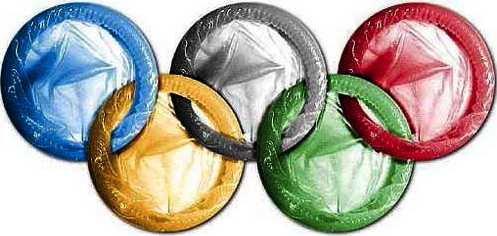
The Olympics: The World Coming Together To Do Something Nice For Once In Its Life

26 Jul

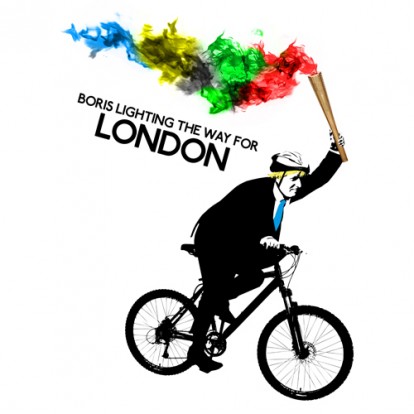
The Olympic brouhaha: yes, it exists. We all knew it would and we were right. Babies need their own tickets but might not be sitting with their parents? Check. Budget issues? Check. Will.i.am carrying the torch? Of course. Security bungles? Got ’em. Confusing the South Korean flag for North Korean one? Yup. Boris Johnson? Obviously.

However, as the old man who appears to be living in an empty shed behind the primary school told me as I passed him this morning, “Catch the Olympic spirit, duck! Why not?” He has a point. Why not get excited for something that at least kind of temporarily unifies the world in the spirit of goodwill, dedication and sportsmanship? Before I had a chance to respond to him, he shouted, “Go for the gold!” then tipped over and fell asleep in a puddle of urine (I presume his own). I think we can find inspiration in his unintentionally wise words.

I shan’t be attending any of the events myself. I entered the lottery and did receive a few tickets, but I decided to be generous and donate them to a charity to make some poor kiddy’s Olympic dream come true. (A little boy from Laos received them, though I’ve got no idea who’s paying for his and his family’s flight to London but I can tell you for sure it ain’t gonna be me). I feel like my act of kindness is a perfect example of the positivity that the Olympic games can foster.

If you’re not much a sports fan, it’s easy to feel intimidated (read: bored) by the event, but there really is something for everyone at the Games. You’ve got twenty-four hours left, so use it wisely to learn something about what’s going to be happening here over the next few weeks. Stop being so difficult and just get with the programme, why don’t you?

Five Things Olympic Skeptics Should Consider:

  • Most of the athletes’ bodies are pretty damn easy on the eye and are usually displayed in tight and/or skimpy clothing. Those of you who normally have to shamefacedly ogle sexy, young things can do so openly during the Olympics. Cheer while you’re ogling, and you’ll earn respect for your patriotism.
  • The BBC will be broadcasting 2,500 hours of TV, radio and online coverage of the Olympics, none of which will be fronted by Fearne Cotton. That fact alone is bound to bring joy to the entire viewing public.
  • I don’t support gambling, as you know, but there’s some good money to be made if you place your bets wisely. For some insider information, look no further than this: I’d stake Christopher’s inheritance on Cyrek Nazwisko from Poland taking home the gold in Men’s Singles Synchronized Swimming. Apparently his precision is impeccable, and he’s an underdog as well which always makes for a happy ending (and large cash payout).
  • The Olympics are an ideal educational experience for children and adults alike. Two hundred and five nations are sending more than 10,000 athletes to London so there will be ample opportunities for learning about different cultures and customs while laughing at their silly names and ridiculous national anthems.
  • Basically, every copper in the country is going to be occupied elsewhere so if you’ve been meaning to have it out with that bloke who borrowed your ladder but never returned it, now might be a good time to break into his garage and take it back. You can thank the Olympians for helping you resolve that issue.

If you’re not interested in the Olympics, you’re not interested, and I’m not going to fight you over it. If you want to be stubborn and throw away a chance to enjoy something nice for a change, you’ve got that right.

But I’ll just leave you with this thought: the Olympic motto is “Faster, Higher, Stronger.” Remember the last time you heard those words and chose to ignore them? That’s right, it was the night before your ex girlfriend chucked you and told the whole town how crap you are in bed. Think about it.

Gum: The Devil’s Chew Thing

12 Jul

I don’t like to get on my high horse in these situations, but chewing gum is a subject I feel quite strongly about. I don’t want to make too fine a point of it, but suffice it to say, I hate it and would gladly lay down my life to stop its manufacture.

I grew up a kid in America so, yeah, I experimented with gum. But the more I learned about the lives it’s destroyed, the more grateful I am that I’ve not touched a piece of it since my teens.

In my day, gum came in many guises, deviously designed to appeal to all sub-groups of the culture. Children whose parents didn’t love them were given gum with hard shells. Gumballs were dispensed for a coin from machines or kids broke their teeth on Chicklets. This company even went so far as offering gum geared specifically towards infants with their “Tiny Size”; children under 5 didn’t bother even chewing these, but just ate them as their suppers.

Slightly more up-market gum could be found in flat sticks. Wrigley’s (I believe in naming and shaming) was the brainbox behind this travesty. Many adults fell prey to stick gum, especially because its tastes were distinctly grown up: mint varieties, cinnamon and Juicy Fruit, with its “fascinating artificial flavor” of soggy cardboard. Sadly, the invention of Fruit Stripe gum, with a cute rainbow-striped zebra as its logo, attempted to turn children on to stick gum as well. No one was safe.

As with all things, adult gum eventually became “sexed up” with the discovery of Freshen-up, a small square of gum marketed as an aphrodisiac: the initial bite down sent forth a gush of gluey goo which gummed up one’s molars and was very unpleasant to swallow. How this made it past the Christian Right I will never know.

And, of course, there was bubble gum. Bazooka Joe gum, a pink rectangle of the hardest substance known to man, was sold in individual pieces, each of which was accompanied by a comic featuring an evil little shit with an eye patch who enticed children into “joining his gang.”  Violence was also a theme with the selling of Hubba Bubba, a softer cube that encouraged young people to engage in “gum fights.” Another cube-shaped bubble gum was Bubblicious, which contained granules of what most assumed was sugar (I’ve never seen this verified in print) and was marketed using words like blast, blowout, and bomb. Clearly the act of gum bubble blowing must give rise to a hitherto untapped source of human brutality, because god knows, I’ve never seen someone do it without my instinctively slapping their face.

These days, you’ll find many more variations and I don’t doubt new brands are cropping up each minute. I do my best to avert my eyes at the shops but I know those dastards continue to develop new sizes, shapes and colors; one afternoon, I swear I saw nicotine flavoured gum behind the counter at the chemist’s. Have we sunk so low as a society? It truly makes my heart ache. If consumers would just stop to think of all of the harm gum has done—the broken dreams, the lost fortunes, the families torn asunder—I know they would resist its lure and we could shut down gum factories once and for all.

I don’t cry often, you know that. But when I do, it’s usually because of gum.

The Supreme Court For Dummies

30 Jun

In theory, the US government is a simple set of checks and balances. However, in reality, it’s so comically complicated that even American elementary schools can’t help but acknowledge the government’s circus-like qualities.


This week one of the branches—the judiciary—has been all over the news media. To understand why, we need a quick reminder of how the Supreme Court works and why it’s so crucial to the American way of life.

Many are unaware of how important Aristotle was to the founding fathers of the United States. Seriously, they were all over him like white on rice. Aristotle talked about three types of government: democracy, oligarchy and polity. James Madison and the rest of the Philadelphia Convention lot decided that they were such big Aristotle fans that they would embrace all three.

Democracy, defined by the big A as “rule by the majority,” takes place in Congress, the legislative branch. Congress is made up of the Senate and the House of Representatives. When a new law comes to each group, members shout “Yea” or “Nay” and whichever side is the loudest has the majority and therefore wins. (Note: in the mid 1900s, they added paper ballots as well as some laws were incorrectly passed due to the presence of Sen. William “Big Mouth” Billingsley, whose voice the Speaker of the House ruled “unfairly blessed in the decibel department.”)

Oligarchy exists in the executive branch.  An oligarchy is rule by the few. In this case, the few are those gentlemen who have been elected the President of the United States. Aristotle also said that oligarchy was rule by the wealthy and he wasn’t half right there, my friends. The President’s job is to give some speeches, appear posthumously on coins and, in recent years, be incorrectly blamed for a global economic crisis in an attempt to disguise some of the citizenry’s inherently racist beliefs. It’s a tough job, but he does get to live in a big white house for free while doing it.

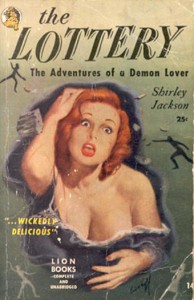
This cover is so not indicative of plot.

This leaves us with polity; this is a form of government where all citizens take turns to rule and is what the Supreme Court is all about. Every July 4 the United States holds an event similar to the one in “The Lottery” by Shirley Jackson. The Vice President drags a great big box onto the North Lawn, inside of which are slips of paper containing the names of every US citizen (over the age of eighteen, obviously). I forgot to mention that there’s a big crank on the side of the box. At exactly twelve noon, the festivities begin. (This event is thoughtfully broadcast live on all three major networks, and on a slight delay on Fox.) The First Lady gives the crank a few twirls (hence, Michelle Obama’s impressive bicep muscles), mixing up the papers inside. Over the box is one of those claw things which is carefully guided by the President into the box to select a single piece of paper. He continues doing this until he gets so frustrated that he quits (most recently this was after the ninth go). Then he reads aloud each name from the slips and introduces them as this year’s lucky “Justices.”

The Justices then go home to pack and in October are shipped off to the “Supreme Court,” a sort of Big Brother-type set up where they live, eat and sleep together while reading over and hearing arguments about the decisions they’ll be asked to make. Monthly, they each take turns in the Diary Room, sharing their insights, asking for additional information and talking about how much they miss their families.

Eventually they’ll all come together to make a collective decision about the right or wrong-ness of the issues put before them, and this is what they have been doing just recently. They then get a big party and get out so the cleaners can get to work in preparing the Supreme Court for the next year’s chosen few.

There have been some big topics on the table this year, and I’m sure it’s been difficult. They had to decide on issues as varied as prisoners’ rights, copyright protection, forced euthanasia of sick livestock and if US citizens born in Jerusalem can list Israel as their birthplace on their passports. I’d have loved to have been a fly on the wall for some of those conversations!

The decisions that got the most media attention were, of course, whether or not the Health Care Act was legit (their decision: yes); whether or not individual states could actually let people rather than corporations decide election results (their decision: no); and whether or not individual states can allow police to harass people with brown skin and/or interestingly spelled surnames (their decision: yes and no).

I will admit, though, that the Supreme Court decision that really blew my mind was when they ruled on the unconstitutionality of the Katie Holmes-Tom Cruise marriage. I just did not see that coming. I’m really wondering if that case would have come up at all had James Van Der Beek‘s name not been selected last July.

Doctor, Doctor, I Feel Like A Pair Of Wigwams*

21 Jun

According to the Guardian, it’s possible that at least 26,000 patients may have been affected by today’s “go-slow” industrial action by doctors.  The BMA will meet to decide whether or not to do another day.

It’s a difficult situation—most doctors make decent salaries compared to many but at the same time the Government’s mucking about with their pensions just doesn’t seem right. However, I shan’t be dipping my toes in the tidal wave of that argument tonight. Surely this Government, with its abundance of fresh new ideas, will be able to propose a satisfying solution, yes?

However, there is something that we the people can do to help ease the financial costs of the NHS.  My first recommendation is to be glad it’s around. I’m not saying that everything in the National Health Service is tip-top nor am I saying that we shouldn’t speak up against the problems. I myself have personally left over 53 cards in the suggestion box at the Royal Infirmary in the last twelve months. However, even as I was carefully writing out my complaint about the Matron’s disdainful look when I suggested my friend might prefer a north-facing bed, I did so gratefully for we are lucky to have the NHS and we mustn’t forget that.

Of course, I come from a country where health care for all means socialism and socialism is as evil as cursing children, kicking puppies and burying your grandma alive as soon as she’s got a little cough. Many Americans’ belief in individualism leads to a rather self-centred approach: I do for me, you do for you and ne’er the two shall meet (unless, of course, I need you to come put out my house fire, fix the pothole on my road, or stop this murderer from murdering me).

I don’t personally subscribe to this belief. I pay my taxes to benefit my community. I just don’t have the time to run school systems, police stations, libraries, etc. Though officials from all these institutions continue to contact me for input, I just can’t squeeze them into my tightly booked schedule. So instead, I throw some money their way. Does this mean I am always happy with how the money is spent? No. So I speak out: by voting or striking or filling suggestion boxes or hissing loudly whenever George Osborne comes on the telly.

It’s all about perspective really: one way of looking at it is that I pay my taxes to keep the NHS running so that when I am sick or hurt I can get help. Most things that benefit my community benefit me as well. However, even if I look at it as I am paying for someone else’s health care, then surely it must work both ways—someone else is paying for my health care.

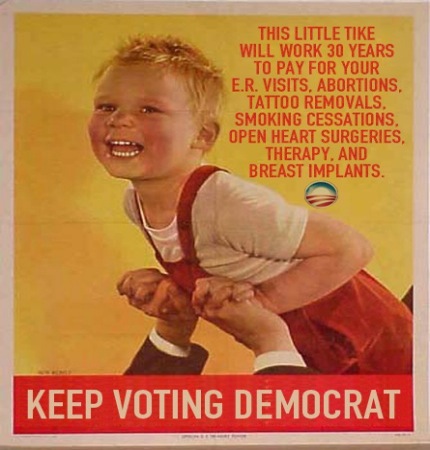
Save this little boy’s money from evil!

Unfortunately, many Americans have a third perspective. They imagine that health care for all means that at the end of a long day of work, sweat dripping from their brow, they’ll be approached by a poor, toothless Jerry-Springer-reject sauntering up and demanding their hard-earned money to get a boob job for his common law wife (who is also his cousin). And they’ll be forced to hand over their wallets because that’s how socialized medicine works in their world.

However, it’s not just enough to be grateful to the NHS, we can also be mindful. Just because we have doctors available to us doesn’t mean that we should get stupid about using NHS resources. It’s not always necessary for us to go to the doctor. For example, even though some surgeries had fewer patients today, no one died (except for the people who did obviously). A lot of the times we book appointments when what’s really needed is not medical expertise, but common sense. Say you’ve got snuffly nose and a bit of a headache, you probably just need a good meal, hot bath and hard sleep. On the other hand, if you’ve just been shot in the eye with a staple gun, a trip to A&E would be appropriate. It’s about being sensible.

Sadly I’ll be unable to attend any meetings between the BMA and Andrew Lansley in the next few weeks, so fingers crossed, a compromise can be reached without me. We do live in frightful times, finance-wise, but we mustn’t let these difficulties hurt our country’s most valuable asset: the NHS and/or Jimmy Carr’s career.

___________
*Don’t worry, you’re just too tense.