Archive | Cleverness RSS feed for this section

Are You Being Bullied?

1 Sep

It’s school time again, and students of all ages are sharpening their pencils, pressing their uniforms and buffing up their saddle shoes (yes, I’m talking about masturbation). Sadly, in addition to homework stress and test anxiety, school can also give rise to bullying. The legal definition of bullying is:

1. Getting all up in someone else’s face for no good reason, 2. Being cruel to someone just because they are different (usually better) than you, 3; Just acting like a real dick

Of course, bullying doesn’t just happen to children; grown ups can be victims as well, especially if they’re great big babies about everything.

If you feel like you are being bullied, here are a few proactive steps you can take:

1. Hold your hand up to the bully’s face and state in a firm but calm voice, “Bullying is wrong. Stop bullying me, you big bully.” Give the bully the worst stink eye you can muster.  This should help the bully see what a total bellend he (or she, let’s be fair here) is being. This is particularly effective if you can do it in unison with other people, to show everyone that bullying will not be silently tolerated.

2. Report the bullying to a person in power—a form tutor, principal, boss or head of the FBI. Keep clear documentation to present as evidence. If you’ve filmed the bullying, you should not post it to YouTube, even though I bet it’d inspire some hilarious comments.

3. There is strength in numbers, so offer other victims support. Start an anti-bullying support group. But don’t call it that. Refer to it as “Football Club” or “Art Group.” Don’t ask for trouble.

I do not advocate attacking the bully—avoid violent actions or violent words. Fighting back like this is never a good idea: firstly, it takes you down to the bully’s level; secondly, look at your scrawny body. That bully is going to kick the shit out of you and how’s that going to help anyone?

Of course, it can be helpful to remember that bullies bully because they are actually sad, insecure or damaged. If that knowledge gives you some pleasure, make the most of it. Also, you might find it helpful to know that studies show that 99.157%[1] of bullies end up living miserable lives, either in prison, mental institutions or cabinet positions. They’ll suffer eventually, don’t you worry.

If by chance, you are the bully—all I can say is shame on you. I’ve no respect for bullies and I strongly encourage you to change your ways.[2]

[1] Probably.

[2] You are also a smelly dum-dum head and your hairstyle is stupid.

How To Solve A Murder

10 May

I certainly don’t want to be an alarmist, but if there’s one thing I’ve learned from the Crime and Investigation Network, it’s that most murders are not solved until there’s at least enough mystery and intrigue to pad out a forty-two minute broadcast. I’ve also learned that we are all likely to be involved in crime, especially if we live in ‘a town where things like this just don’t happen’. Assuming you don’t end up a murder victim (if you do, please disregard this advice), you’re likely to find yourself embroiled in a crime investigation at some point, so here are some hints for wrapping it up neatly.

GATHERING EVIDENCE

1. Don’t let small town cops run the scene. They will walk all over evidence, forget to take photographs and allow onlookers to run amok. Get the Feds in straight away.

2. If the murder weapon is not found near the body, check the bottom of a nearby body of water. It’ll be there. It always is.

3. Any obvious clues are pointing you towards the wrong person.

4. Swab everything. Spray Luminol everywhere. Save some air from the scene in a jar; by the time this case goes cold and then is reopened years from now, they’ll probably be able to get DNA from air so think ahead.

ZEROING IN ON A SUSPECT

1. The closest person to the victim is usually your best suspect. Unless the killer was a stranger. Or it might be someone the victim knew long ago or casually bumped into on the street. Interview all of these options.

2. Do surveillance. Surveillance is cool. Locations to watch are the crime scene, a nearby body of water and the killer’s workplace.

3. Do not bother running the first ten suspects’ DNA or fingerprints through any databases. They won’t turn up any matches.

4. The last person to have seen the victim alive and the first person to see them dead is the killer.

QUESTIONING THE SUSPECT

1. If the suspect knew the victim well, they should be hysterical 24-7. If they’re not, they’re the killer.

2. Check the suspect’s arms for scratches. Innocent people never have scratches on their arms; it’s as simple as that.

3. If the suspect sticks to the same story, it’s been rehearsed. Arrest them. If their story changes at all, they’re covering their tracks. Arrest them.

4. If you’re filming the interrogation, be sure the camera gets your good side.

TRYING THE CASE

1. Don’t worry if you don’t have a motive, weapon or any physical evidence. Those matter much less that you expect.

2. Contact criminal profiler Candice DeLong. Her precise analysis will cover all your bases: ‘Generally speaking, when females kill, they choose people they know. It doesn’t have to be someone they know well. Sometimes they choose a stranger’—if that’s not expert proof, what is? She also takes extreme pleasure in explaining the extreme pleasure people get from killing. The jury will love her, and her television connections will fast track you to stardom.

3. Get Nancy Grace on board. You’re sorted.

The Gee-Gees and Me

14 Apr

It may surprise you to know that I’m interested in the Grand National, as I’m usually anti events that lead to animals being killed (unless it’s tastefully done). However, today, like most of the nation, I’ll be glued to the telly watching the legendary handicap steeplechase run.

When I was an itsy-bitsy girl, my father had an old Army friend we called Uncle Eli. Every once in a blue moon, he would spend a few days in our family home. His visits were usually preceded and followed by at least ten days of silence from my mother, which may explain why I found time with Uncle Eli so enchanting. I thought his excesses were exotic and exciting. Of course, now I find barely functional alcoholics rather less attractive, but then, a visit with Uncle Eli meant a weekend of good fun.

One year, my father and Eli invited me to join them on one of their usually private jollies. Though I requested advance knowledge of the details (so I could choose my wardrobe wisely), all Eli would tell me was “You’re going to have the time of your life.”

And I did. After a quick stop at the one bar in town which also had a children’s menu, we drove through the gates of Melvin Purvis Raceway. As soon as we got out of the car, my face was stung by the frenzy that surrounded me. Men of all sizes were frantically running about, holding newspapers, cigars and their wallets as they rushed to the windows and then trackside. While my father and Eli chose their bets, I watched the enclosure through my binoculars.

I was initially seduced by the satiny sheen of the jockeys’ silks (I was a child and can be forgiven for this). But soon I was studying the horses. I don’t know how anyone can deny the beauty of the equine beast: the muscular curves of the thighs, the seductive shape of the face, the crowning glory of the crest. One in particular caught my eye: a grey colt with a spring in his step and a twinkle in his eyes. I was no expert, of course, but it felt as if that horse was trying to tell me something and I knew what it was.

I immediately ran to the sides of my adult companions. “Eli,” I said, with absolute certainty, “the smart money is on the grey colt, number 27.”

My father tried to shush me, but Eli knelt down and said, “What’s the scoop, scout? You got some insider information?”

I thought of the way that horse had so boldly stared me down and said, “The information is inside me. I’m telling you, I just know it.”

He flipped over the paper he was holding, scanned the page and tutted. “He’s being ridden by a bug boy, doll face. Long shot–95/1. I don’t rate his chances.”

I pulled at my pocketbook, emptied all of my resources into my hand and passed it over to him. “Then use my money,” I said. “Place the bet.”

There must have been something about the tone of my voice or perhaps it was the awkwardness of a grown man being given a child’s life savings, but Eli scurried off and did as he had been told. The three of us then made our way to the rails.

“What’s his name?” I asked as I went up on my tippie-toes to get the best view.

“Butch Dreams Big” came the answer to my query.

Though the race seemed to only last seconds and the horses passed by me so quickly that the entire field was a blur, I knew what I knew.

“A blanket finish!” I heard a spectator shout. I think I was the only one there who was not surprised when the winner was revealed.

Eli immediately began asking me to pick my favourites in other races, but my father intervened. We collected my winnings (which my father pocketed) and walked silently back to the car. Eli left town the next day, and I was never included in one of their outings again.

The fact that my father did not tell my mother about our adventure made clear to me that, despite my newly discovered talent, my life’s meaning would not be found on a racetrack. I have never placed another bet.

The closest I allow myself to come to this forbidden pleasure is watching the Grand National each year. Christopher and I each have a flutter, but the winner gets personal favours instead of monetary rewards. I’m pretty confident about my choice this year, but I shan’t share it. If you’re betting today, please be sensible.

And good luck to the horses and riders. May you all end your day without bullets in your heads.

Crime Prevention Tips: Don’t Let The Season of Joy Make You Stupid

24 Nov

As we are approaching the season of consumerism, scratch that, giving, I’ve decided to offer some of my crime prevention suggestions to you, my loyal readers, free of charge. Please do not assume that these suggestions aren’t as valuable as the ones I’ve given in lectures in years past (where the organisers have generally asked for a small monetary donation): it’s just that here you don’t get biscuits. Go grab yourself some if you feel they’re needed for you to be able to pay attention.

I only mention that I’m offering this advice gratis to highlight that, sadly, during the run-up to Christmas, there is a smorgasbord of scammers and dodgy dealers just waiting to relieve you of your hard-earned cash. This is my first tip: be weary of everyone.  Now you know me, you trust me, because I’m very likeable, honest and always leave my clientele satisfied, if you know what I mean. So were I to request a small fee, it would be sensible to pay it. However, how many times do you hand over your coins or credit cards to people whom you do not know, admire or find sexually alluring? Just bought your wife a necklace–are you sure the jeweller isn’t in the blood diamond trade? Found a great deal online—how reputable is the company? Are you supporting animal abuse with your holiday meal purchases? The donation you made outside the Post Office—was the fact that the man owned a red bucket all you needed to hand over a tenner? I’m certainly not saying that you shouldn’t buy things from retailers or give money to charities. I’m just saying if you’re going to be mindless about how you throw your money about, don’t come whining to me about being ripped off. And if you are financially supporting corrupt companies and practices, then in many ways you’re just as bad as the criminals themselves. What are you going to do next, kill a fluffy kitten just to watch it die? You disgust me.

Another crime that seems to peak this time of year is pickpocketing. People get so wrapped up in how many errands they have to run or how many purchases they have to make that they let their guards down. They focus on their lists or rushing to beat the queues, and they leave their purses or pockets easily accessible to baddies. My tip to avoid those with sticky fingers is to keep your wallet hidden upon (but not within) your person. Women are advised to keep their cash in their brassieres; men should tuck it discreetly into the pockets of their Y-fronts. Yes, it may be uncomfortable and possibly awkward at the till, but it’s safer, and safety don’t come easy, baby. I do not, though, recommend this technique when shopping in toy stores, for obvious reasons.

Break-ins are also popular during this season. It’s best to assume that burglars are constantly staking out your home. They’re watching you carry in bundles of purchases, they take note of the empty boxes you put out with the recycling, they know when you’re packing the car to go away for a few days. The only way to deal with this threat is to beat them at their own game. Be sensible when displaying new and expensive items you’re bringing into the house; use security lighting outside your home; cancel milk and post delivery, set timers or hire a housesitter if you’re going away; devise a schedule which means a family member is sitting guard at all entry points to your house 24-7 from today until mid-January. Don’t be a passive victim. Getting robbed is terrible, but it stings even more if you could have proactively avoided it.

Lastly, the holiday season includes many parties, and these parties often involve the imbibing of excess amounts of alcohol-based concoctions. As statistics show, when people drink too much, they are more likely to become aggressive which can lead to cruelty, violence and property damage. My tip for avoiding any trips to hospital and/or the local police station is to water down Granny’s sherry from the get go and confiscate both her cane and knitting needles upon arrival.

Be safe and wise when celebrating, my dear ones, and have lovely holiday season!

Halloween: We Fear What We Don’t Understand

27 Oct

Here is something I know: in England the current connotation of the word Halloween is “another American concept that is slowly destroying the world via our children’s innocence.”

Here is something you know: I am very clever and generally understand things better than you do.

Therefore, in the spirit of John 8:32, I would like to enlighten you to some truths about the Halloween holiday so that you shall be set free from your misconceptions. While the practices of the holiday should be limited to children, the theories behind it provide some good moral lessons we’d all do well to remember.

COSTUMES

Adults wear costumes (yes, of course, I’m talking about fancy dress, don’t pretend you don’t know what I mean) to escape their own mundane existence and live someone else’s life for an evening (although why people think slutty nurses’ lives are so fascinating is beyond me).

However, for American children, costumes serve an educational purpose; they’re used to introduce them to different career options. By the time American children reach puberty, they have already had first hand experience in a number of fields: medical, law enforcement, construction, super-heroism and witchcraft. Another benefit of children’s costumes is that they should be homemade. Homemade costumes are economical; support recycling (for at least a decade in America, all pantyhose were sold in plastic eggs, yet you never saw one of these in the landfills because they were ever so crafty); and encourage ingenuity within a family, forcing children and parents to discover new purposes within objects (I once wore Mason jar bands as earrings for my fortune teller costume, don’t tell me that’s not creative).

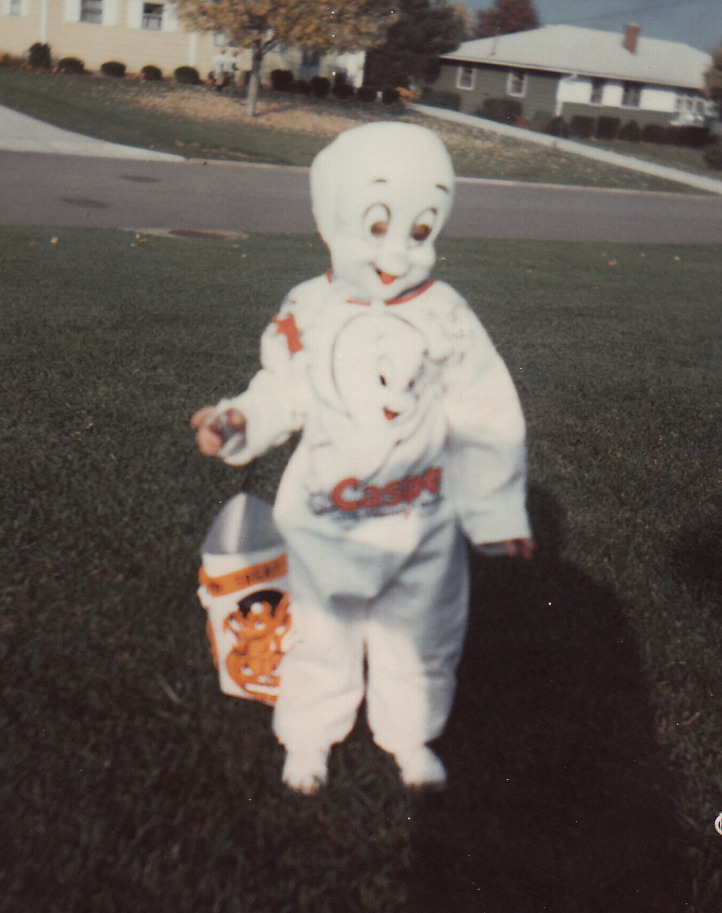
Sadly, families today often feel that they just don’t have the time to devote to the traditional costume-making process. Purchasing a costume loses some of the true meaning of Halloween; however, if it has to be done, the only appropriate option is a boxed costume which contains a highly flammable, colourful smock-type outfit and a plastic face with eyeholes and a thin, easily snappable piece of elastic to secure it to the head.

TRICK-OR-TREATING

Trick-or-treating is not begging. It’s actually an ancient form of barter: when you give a child a “treat,” you are actually paying for the entertainment they have provided you by making you feel frightened, amused or vaguely confused. Trick-or-treating in America is organized; there’s a single night chosen and if you don’t want to participate you just turn your porch light off. The “trick” part of the name is often interpreted as a threat, but this is incorrect. Despite what the horror films tell you, there are actually no recorded incidents of any mischief, criminal or otherwise, around Halloween on the books of any single American police station. Fact. Being scared, though, is part of the holiday’s tradition: ultimately, it’s a lesson in mortality and the sooner a child learns of his impending death, the happier the child will be, I always say.

Treats are generally candy, partly because sweets are enjoyed by most people and partly simply because they come individually wrapped. Years ago there was an urban legend that strangers were sticking razor blades in apples and contaminating cookies, so parents feel safer when a child comes home with individually wrapped candies–though, of course, a hypothermic needle could easily be used to inject candy through its wrapper without raising any suspicion (would-be poisoners should ignore this remark).

The candy most associated with Halloween is candy corn. To eat candy corn, you are required to bite off, chew and swallow the white bits and then discard the rest in the nearest bin. A little wasteful, yes, but it’s the law.

JACK O’LANTERNS

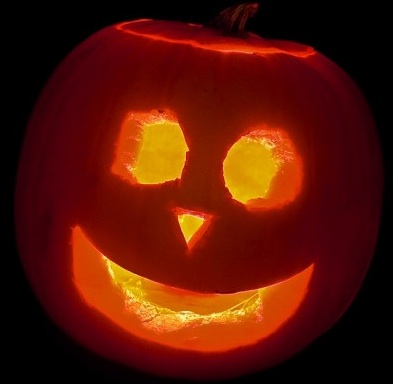
These days, there’s a real art to pumpkin carving. I myself prefer the traditional Jack O’Lantern face—circle eyes, triangle nose and the toothy grin. Carving even this relatively easy design is a great way to develop dexterity and knife-handling skills. The inside of the pumpkin is then frozen to be baked into Thanksgiving pumpkin pies and the seeds are roasted for a nutritional snack. In the carved pumpkins, you place a candle. You do this because it looks nice. Carving pumpkins is just nice, okay? Doesn’t niceness matter anymore?

Ultimately, I don’t care if you like Halloween. Support it or don’t, it’s no skin off my nose. However, if you decide you don’t want to be a part of it, keep your anti-American sentiment out of it. Halloween was an important part of my childhood; don’t let your ignorance try to taint my memory. If you find any of these meaningful traditions interesting enough to adopt in your own lives, I am happy to provide you with additional suggestions, costume designs and recipes. However, I request that you please ask your children not to come round my house during Corrie.  Halloween or not, that’s really annoying.

Survival of the Wittiest

4 Sep

A man from the US Homeland Security Department told me that there are five basics for surviving any disaster: food, water, shelter, fire and security. Though it was one of the more unusual pick up lines I’ve been confronted with at that particular dancehall, this man clearly knows “what’s what.” During the most recent disaster I’ve personally survived (the last minute cancellation of a romantic engagement due to “work commitments”), these five things served me well.  Christopher cooked me a delectable dinner in my own fabulous kitchen, accompanied by a tall glass of water topped up with whiskey. I then warmed myself in front of the fire I had started with the thoughtless Lothario’s letters and felt secure with the fact that, despite this man’s supposed dedication to his job, he will never have as healthy a bank balance as I do. Homeland Security really knows what it’s talking about.

However, there are a few finer points on disaster survival that I feel are worth mentioning. These again apply to all disasters, natural or otherwise (and by otherwise, I mean man-made and by man-made, I mean made by men). So I suppose really these survival tips are geared more towards the ladies, the truly innocent victims of man’s inhumanity. They were taught to me by one Daphne d’Ebriété, my first real mentor. A more refined example of a refined woman, you could not ask for. Miss d’Ebriété was in the habit of describing her retiring to her chamber each night as “taking to her death bed.” Although this sounds rather ghoulish, it helped her see that each day could be her last and therefore she lived it to the fullest (which may explain her surprising number of arrests for public indecency). I can recall the final lesson she passed on to me. She said quite simply, “Agatha, dying can be a real pisser. But if you’re prepared, you can help it be that little bit less shit.”

Therefore I shall pass on Daphne’s advice to you now, in hopes that you will use it wisely during the dangerous times in which we are currently living in.

Firstly, a sophisticated woman should never be without a pack of Turkish perfumed cigarettes. Even though smoking regrettably continues to fall out of favour with each new generation, having access to some lovely smelling foreign fags is vital to a girl’s survival. Lighting up one of those babies (don’t inhale if you insist on being such a pussy about it) and fondling it in your delicate fingers will be beneficial in any disaster: the nicotine and injurious toxins that make it smell so pretty are bound to have some kind of positive effect on your nervous system plus its essential sexiness means you will easily be able to seduce your way to the front of the gas mask queue.

perm.JPGAdditionally, a woman should know how to set her own hair. Although it is obviously much more enjoyable to have one’s do done by someone else (ideally a young man with nicely trimmed fingernails), it’s important to be capable of setting it oneself in a pinch. There are two reasons for this. After the apocalypse, we have no idea how difficult it might be to book a salon appointment; global catastrophe is no excuse to look bedraggled.  More importantly, though, the tools of the hairstyling trade may be helpful post-Armageddon: a hot iron will help with making cheese toasties, a barrette can keep your dress from exposing too much thigh and a hair pin could be useful in picking out those pesky chards of glass embedded in your tender flesh.

Finally, it’s wise to always pack a piece.

Following Daphne’s advice has kept me alive and kicking for these many years, and I encourage you to take her words to heart. Tomorrow, we may face a disaster of epic proportions and if you don’t take heed and you end up dead, well, just don’t come crying to me about it.

Sleep tight, dear ones!

Joy: How The Fishes in The Deep Blue Sea Found It

14 Jun
               Jeremiah was a bullfrog
               He was a good friend of mine
               I never understood a single word he said
               but I helped him drink his wine
               And he always had some mighty fine wine
               Singing, joy to the world
               All the boys and girls
               Joy to the fishes in the deep blue sea
               Joy to you and me

This song is the musical representation of that feeling so many of us long for: complete and utter joy. Why is it so difficult to find? Because what no one tells you is to be really joyful, you need to be pig ignorant.

Think about the phrase “bundle of joy”: why do we use it to describe newborns? Because when parents first meet their infant, they are completely ignorant to the hell that is soon to follow. They hold the little creature in their arms, gaze into its vacant eyes, count its stupid little toes, and feel pure happiness. Twelve years later when they’re summoned for a court appearance, it’s unlikely that their child’s attack on that elderly gentleman with a limp is bringing much joy to their now desperate lives.

As understandably satisfied as I am with my own life, I confess that my moments of joy can be limited. When I look at my reflection in the mirror, I feel many things (awe, wonderment, reluctant sexual arousal), but joy is not one of them. This is because I am not ignorant of all that’s gone in to making me the woman I am. The knowledge of the pain and struggles of my life means that I, unlike the young man at three houses down apparently, cannot experience the ecstasy of joy just by gazing at my person.

Take a moment to reflect on the people who seem most joyful, and you will find they are undoubtedly quite ignorant. But don’t get confused: this does not mean that you have to be a total idiot to feel joy. The etymology of the word “ignorant” comes from the Latin ignoritsi, meaning “like a kitten’s brain,” and I am certainly not hating on kittens. Kittens are clever at many ways (mice killing) yet ignorant of others (chaos theory). This explains why cats look rather solemn when stalking prey, but purr like fools when they see a photograph of Henri Poincaré. By deliberately choosing to not understand that some orbits are not forever increasing nor approaching a fixed point, kittens find joy in dynamical systems.

This is why you will on occasion stumble across a topic on which I am not an expert on. These examples of my own ignorance are often the very things which bring me the most joy. I do not totally understand how jazz music or fruit pastilles are made, and therefore I can find joy in both. The same goes for black tar heroin. There is no shame in being ignorant of some things in this world; it’s all about pro-actively choosing which subjects are important to understand, even if that means sacrificing one’s own personal jubilation.

Given that the song was released in 1970, I am willing to excuse those hippies who believed that it was Jeremiah’s wine that made Three Dog Night so joyful. However, a less flower-powered analysis of the above lyrics highlights my very point—the line “never understood a single word he said” holds the key. Knowledge can be power, but sometimes ignorance is bliss.

The History Books of Future Generations

29 Mar

This is an interesting time to be alive.

Which is good for us, as it just so happens this is the time when we’re all alive. No use banging on about 1936 being an interesting time because I’m guessing most of you were not around during that year (despite my rather “mature” writing throughout this site, it appears to be bringing in a younger and younger audience every single day).

One complaint often made about our time is that we all possess the attention span of a slightly dim goldfish. With rolling news, Twitter, soundbites, we can’t seem to focus on any one thing for very long. Workers’ pay is docked, children are medicated, lovers are chastised–all because people struggle to keep their attentions tuned into one task. Many cultural critics argue that it is the greatest problem facing our world today, but sadly by the time they get through their first sentence of explanation, most viewers have already turned over to see the latest sports score, weather update or Katie Price scandal.

There’s a lot going on, and it can be difficult to keep up with all of it.  I confess sometimes I struggle. I have publishers, reporters, well-wishers and admirers clamoring for my attention every waking hour and you know I don’t like to disappoint. But all of us need to keep our priorities straight and  deal with our day-to-day demands while still being informed, global citizens. Otherwise, we are likely to miss much of what will someday make up the pages of history books.

For example, we are living in a time of great protest. From Egypt to Wisconsin, Syria to London, millions of people are taking to the streets to have their voices heard. Were you one of those history-makers? Have you read about them, watched the reports, spoken up for or against? Do you know why they’re protesting? Some people’s excuse for their current events ignorance is that it is all too depressing to take in. Maybe they would make the time to focus on what’s happening in the world if what’s happening in the world wasn’t so shitty. It’s true that lots of shit is going down right now; from Japan to Libya to the misery and ugliness we see in our own neighbourhoods (yes, Mr Grimshaw, I am talking about you and your penchant for wearing your dressing gown unbelted)—there’s a lot of bad at the moment. But not paying attention to it doesn’t stop it from happening. We live in a “global” world now, don’t forget: if we’ve learned one thing from Ashton Kutcher, we’ve learned that one flap of a butterfly’s wings can cause a tornado on the other side of the world. I propose that, as depressing as the news sometimes is, you’re better off knowing about that troublesome butterfly so you’ve got a better sense of when to expect your trailer home to be carried off in a twister.

Pay attention to the world. Knowledge does many things—it can protect you, it can benefit you and it can change the world.

I apologise for the lateness of this post. Christopher and I participated in Earth Hour this evening, and I’m afraid that once the electricity was turned off and we got out the battery-operated entertainment, we just seemed to lose all track of time.

Sometimes DH Lawrence Wrote About Nature as Well

12 Aug

DictionaryAs a logophile, I love a good word. There are so many wonderful words out there: tourniquet, crumbly, and trousers, just to name a few. One of my favourite words is nature—it’s brilliant because it’s got so many nuances, so many shades of meaning. Said in a certain way, it may imply wickedness, but, whispered softly, it can be quite lovely (not unlike the word whore).  Despite the fact that the OED takes almost 178 column inches to explain all of its many definitions, ultimately the word can be broken down in two major categories.

Mother Nature

When I was a small child, my parents took me to an ecology rally in Loch Arbour (NJ) where millions of concerned citizens gathered to acknowledge our responsibility to the environment. There I saw a placard (or it might have been a billboard) that read “It’s not nice to fool Mother Nature.” This was the first time I had encountered this particular archetype: the caring maternal spirit of the Earth, who provides for all her children. Needless to say, given my personal experience with matriarchs, it did not ring true for me. However, I can see what they were going for. Mother Nature symbolizes everything that the natural (as opposed to man-made) world offers us, not just our basic needs like food, water, clothing and shelter, but also those things which make so many of us happy, like sunshine, the scent of lilacs, birdsong and cannabis. We’ve got to do better at taking care of nature—it’s not just about cleaning up after ourselves; we’ve got to change our whole attitude and show it the respect it deserves before it’s too late.

Human Nature

There’s some dispute about the concept of human nature. Some people focus on our individual characters, our constitutions or outlooks. They believe each of us has a personal nature: we may have a hot temper or the patience of a saint, we may be trustworthy or we may be devious. Our dispositions are determined by many factors, such as genetics or the influence of our parents or the skills of our hypnotherapist or maybe our wires are just wonky. But do groups of people have their own nature? Is it the nature of all artists to be tortured or the nature of all young people to be fucking idiots?  Psychologists and pornographers are also continuously debating the different natures of men and women—does the arrangement of our chromosomes alter our essences, causing some of us to enjoy making sandwiches and others to prefer shifting bricks?

If there were ever a war between the two categories of nature, let’s face it, Mother Nature would be the hands down winner. The most horrible things on Earth—from violence and destruction to pollution and racism—are the domain of humankind. This is why I struggle to look a tree in the eye.

My explanation of the multiplicity of meanings in just one single word serves as evidence that they’re real clever inventions. Basically, the set up is you put some letters into a certain order and together they make a word which you can write as well as speak and which represents ideas, people and objects, really anything you can think of. This actually works in all languages—including the ones with those funny letters.

Clever, eh?

“Work Is The Refuge of People Who Have Nothing Better to Do”—Another Oscar, I’m Afraid

30 Jul

As my father used to say, “If work was supposed to be fun, it’d be called fun. Work is work, that’s why it’s called work.” Gertrude Stein he wasn’t, but he does make a valid point. So many people today think that success in their careers will lead to happiness. I’m afraid that kind of attitude is going to lead to nothing but disappointment (and premature damage to the respiratory and cardiovascular systems). Very few people can truly say that their work makes them happy. Luckily, I am one of those few. But the rest of the world goes to work, not out of love for their job or compassion for their colleagues or customers, but rather simply for the money. Even Hugh Hefner has admitted, “Bribing young women with dreams of stardom to have sex with my Viagra-fuelled body is not how I prefer to spend an afternoon, but I’ve got to do it to keep up the mortgage on the mansion.”

Ultimately the problem lies in the nature of employer-employee relations. I don’t have the time or energy here to rehash what was so thoughtfully explained by our dear friend Pierre-Joseph Proudhon. The gist of it is this: if you’re the employee, you’re nothing. You will never satisfy your boss; he will never think you give enough. You might have the highest sales figures or land the biggest contract or reach the top of the bestsellers list (for each of your last eleven publications), but he is never going to stop pushing you, pulling you, sucking you dry. He’s The Man and that’s how the Man rolls. You’re fooling yourself if you think you’ll ever be able to overcome this power dynamic. So just stop that silliness right now.

The only thing you can control in a work environment is your approach to your job. So keep two things in mind at all times. First, remember that work is never enjoyable. Everyday you will wake to your alarm, leave your home and head into a fucking nightmare. It might be your line manager blaming you for his mistake, the woman in the next cubicle who smacks her gum, the customer who wants his money back because he didn’t lose the twenty pounds in twenty minutes as your advertising guaranteed he would—whatever it is, it’s going to be horrible. If someone is kind to you, assume it’s a trick. You’re better off expecting the worst and being pleasantly surprised that you’re not emotionally and physically destroyed by home time.

Secondly, maintain a cool distance between you and your job at all times. Don’t give out personal information to anyone at work, not even the mailroom boy you had a fumble with at the last Christmas do. Never call your boss by her first name. Do not sign birthday cards or contribute to going away gifts. When the receptionist goes into anaphylactic shock after accidentally swallowing a peanut, just walk away. Showing you care about any task, person or responsibility associated with work is as good as admitting you’re beat. You might as well bend over, drop trou and let the Man stick it to you.

Keeping these two things in mind will make the experience of work tolerable enough to make it to just one more payday or until you finally hit it big at Foxy Bingo.

When that day finally comes and you are able to bid a fond farewell to your beloved bastard of an employer, remember not to let your guard down. Often we find ourselves feeling a bit more sentimental about our time with a certain company once we know we are leaving. This is a mistake. Remember, you were nothing to those people when you worked there, and you’re even more nothing now that you’re going. A dear friend who is moving on to bigger and better things recently asked me for some advice on writing his resignation letter. He showed me a few drafts he had spent half the night working on, trying to strike the right balance between expressing his appreciation and saying his piece over various grievances. I tore these drafts up in front of his stupid face and sat down to pen this for him (names have been changed to protect the weasels):

Dear Sir,

It is with much regret that I am writing to inform you of my resignation.

When I say “much regret,” of course, I mean “with slight trepidation,” as I am hoping this letter will not lead to any kind of interaction between you and me, beyond the usual meaningless drivel we already share. In fact, this letter need not be acknowledged or discussed in any way. On my final day of work, I will be happy to delete the pornography from my computer, empty my desk and walk away from your life forever. I prefer this company think of me and my time here as if it were a dream–not the best of dreams, not a nightmare, but something in between–a strange but intriguing time where things didn’t really make sense but, in the end, they didn’t really have to.

If you do, however, feel compelled to discuss this issue further, please be aware that I do not intend to bite my tongue about my experiences here. For example, do you remember the woman who invented “The Alastair,” the solar powered vibrator you were convinced she had named after you? The morning after I shagged her, I told her you thought that and she laughed so hard I had to shag her again to stop her from becoming hysterical. Also, if you force me to, I will confess that Phil is the one who’s been pissing in the sinks (I bet you thought it was Tom or John, what with their interest in “watersports”) and that the missing supplies from the stationery cupboard can all be located in Daniel’s lower intestine as he suffers from an inexplicable urge to eat cello-tape. Matt did not earn a degree from Bournemouth; his flatmate (a hobo) is good at both designing fake certificates and writing recommendation letters. Finally, it was James who bought you the inappropriate Secret Santa gift last year; you think he admires you for your stick+it+to+the+mandesign skills but it’s really your arse he is coveting.

I am quite sure neither one of us really wants me to have to share this information. Therefore, why don’t we considered this matter closed?

Sincerely,

The One You Insist on Calling Roger, Even Though My Name is Robert

I’ve no doubt that when he handed in this letter, Robert’s boss was secretly impressed with his coolness towards a company that had employed him for over twenty five years. In fact, I am convinced the suit against him will be dismissed before ever making it to court. He stood firm, calm and collected, and that’s to be admired.

We’ve all got to work (and by we I mean you), so accept it for what it is: a means to an end. Every morning you go, you do what needs to be done, you cash your cheque and that’s all there is to it. It’s not fun, it’s not fulfilling. It’s a job. That’s it.